
The real number for the spot you are standing in - shade and full sun side by side, with source and timestamp on every reading.
Download on theApp Store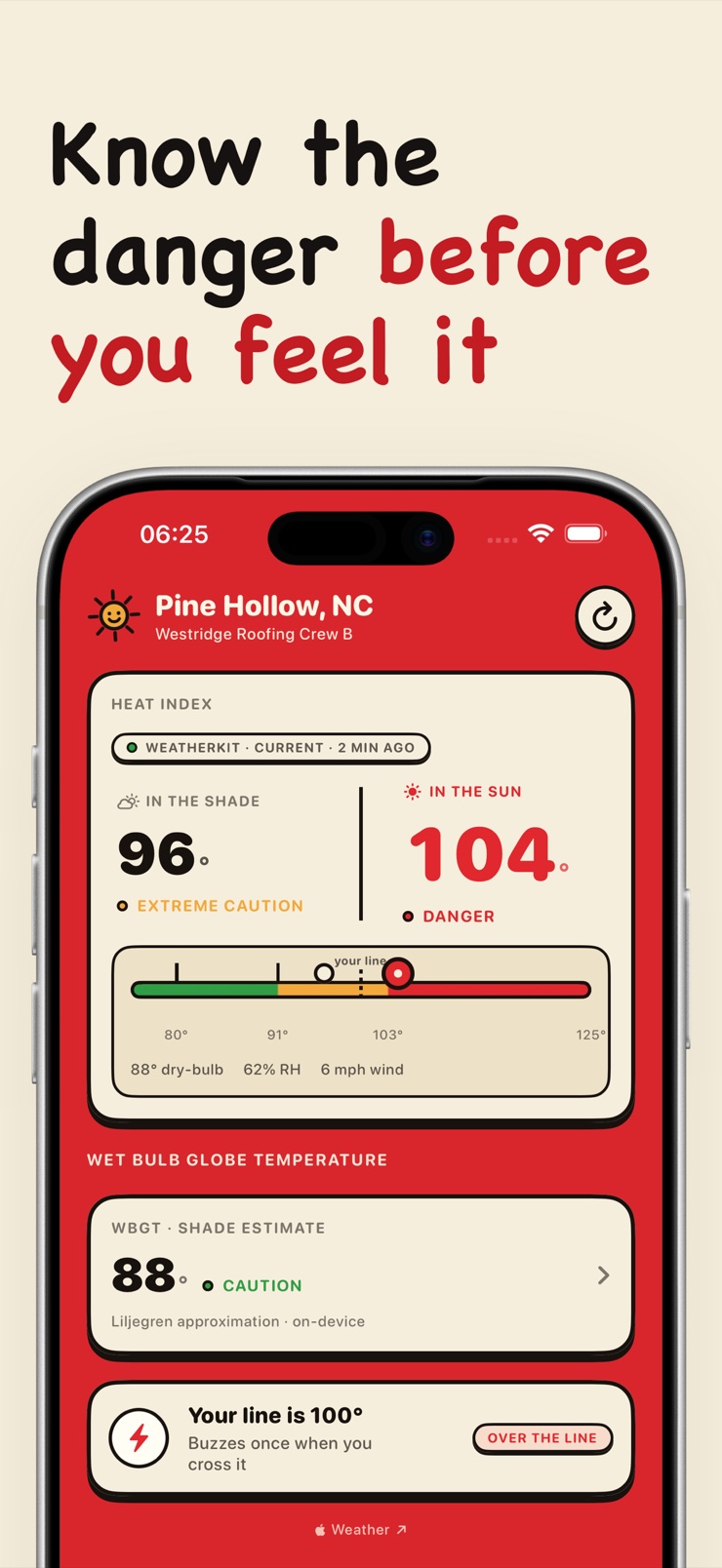
HeatLine reads the heat index for your exact location and shows two numbers at once: the standard shade value and the sun-adjusted value for working in direct sunlight. Outdoor crews, coaches, and anyone who works in the heat get a clear reading with its source and timestamp - never a stale guess.
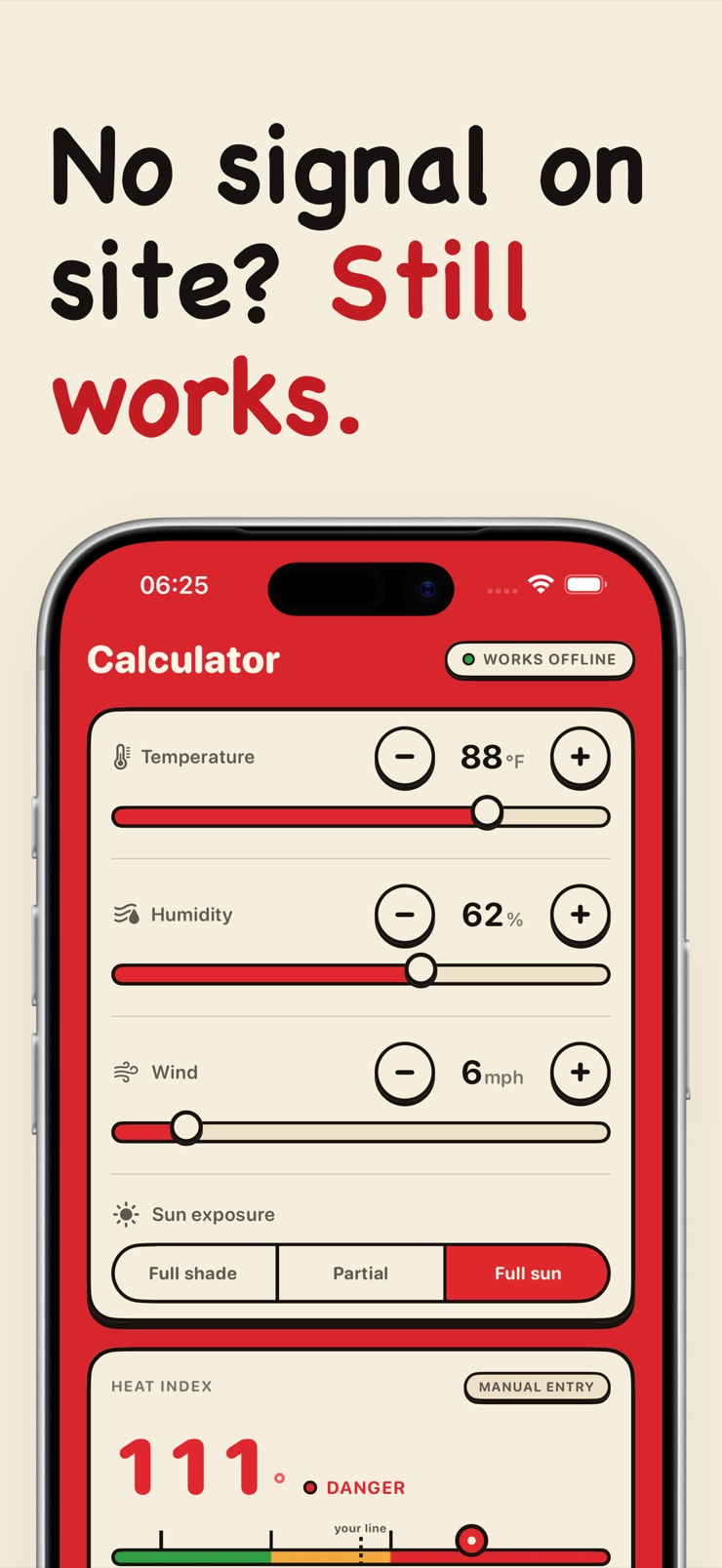
The math runs on your device. HeatLine computes a wet-bulb estimate using the published NOAA equation, and a manual calculator works fully offline: type the temperature and humidity from any thermometer and get the result instantly, even with no signal on the worksite.
Set your own threshold and HeatLine gives a single haptic the moment a reading crosses it. Every reading can go into a per-shift log that you keep, export, and hand off. HeatLine is general weather and safety information for outdoor work - it is not medical advice and it is not a workplace heat-stress assessment, and decisions about working or resting stay with you and your employer.
The standard heat index assumes shade. HeatLine also shows the sun-adjusted value, because that is where the work actually happens.
A wet-bulb calculation using the published NOAA equation, computed locally with no network needed.
Type temperature and humidity from any thermometer or hygrometer and get the heat index instantly - no signal required.
Set the threshold that matters for your crew and get a single, unmistakable buzz the moment a reading crosses it. No notification spam.
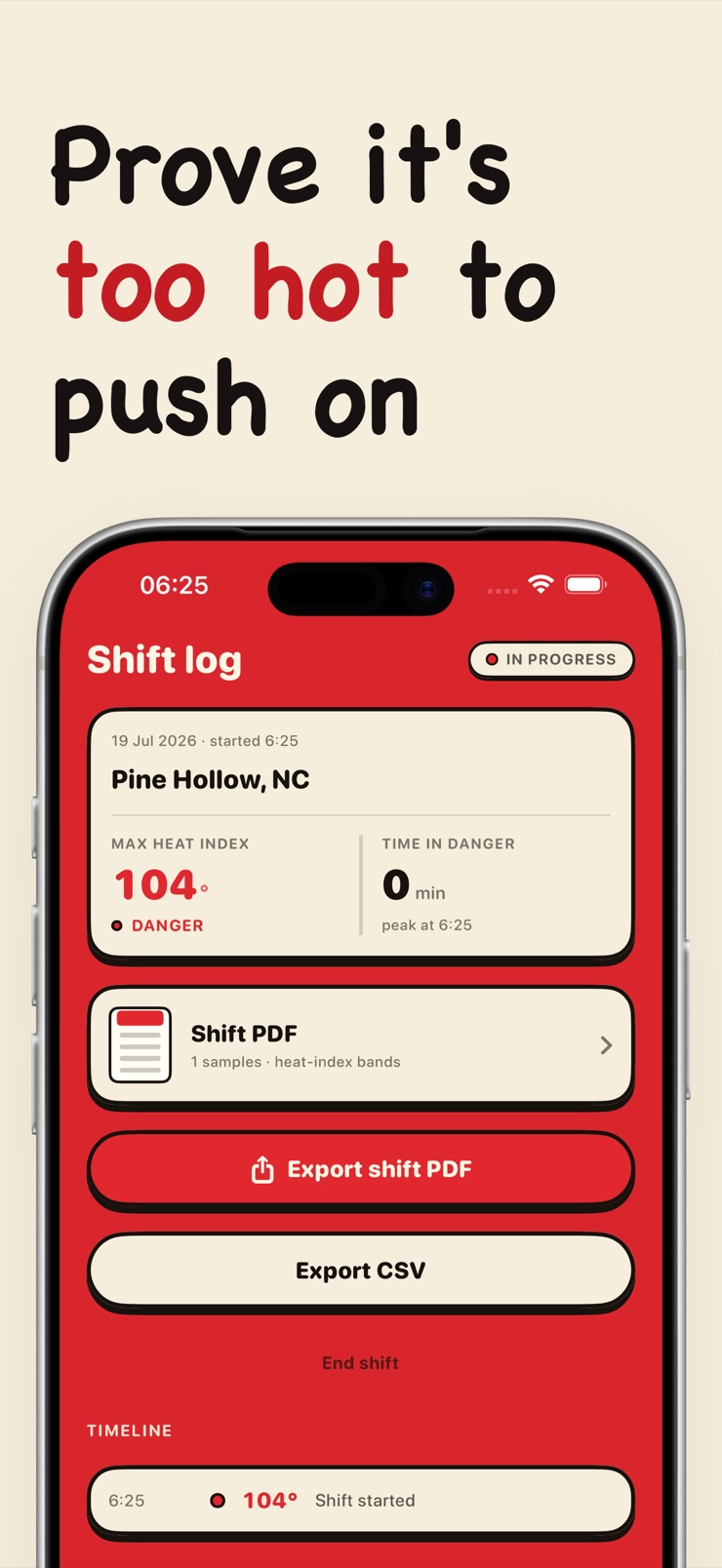
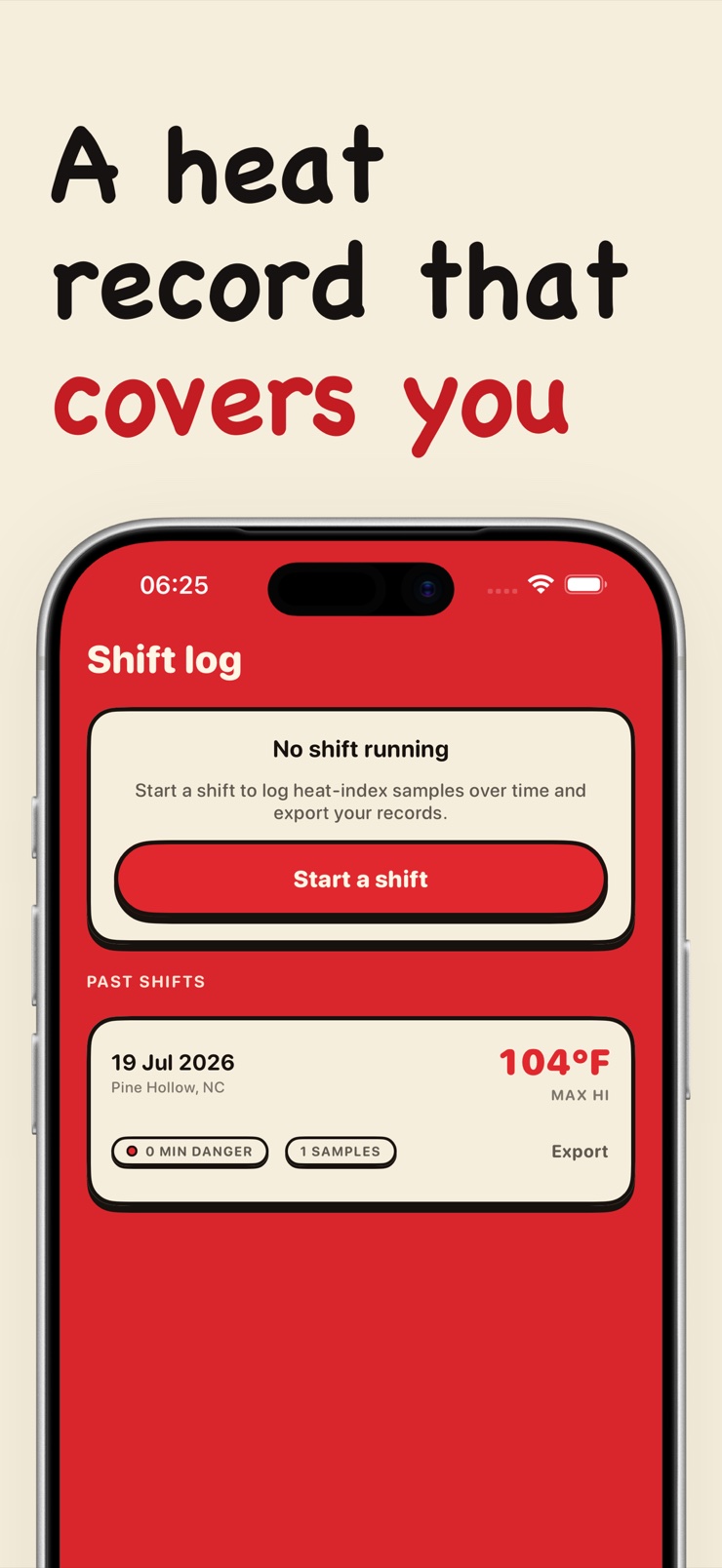
Every logged reading carries its value, source, and timestamp. Keep the shift log, export it, and hand it off at the end of the day.
Each reading shows where it came from and when it was taken, and risk labels follow published heat-index thresholds.
Open the app and read the live heat index for your location - shade and full-sun values side by side.
Choose the heat index threshold your crew works to. HeatLine buzzes once the moment a reading crosses it.
Save readings through the day. Each entry is timed and sourced automatically.
Export the per-shift log and pass it to whoever needs it - the foreman, the office, or the file.
The heat index combines air temperature and relative humidity into a 'feels like' number that reflects how heat actually stresses the body - humid air prevents sweat from evaporating, so 90 degrees at high humidity is far harsher than 90 degrees in dry air. HeatLine reads it live for your location and also shows the sun-adjusted value, since the standard index assumes shade.
The standard method is NOAA's regression equation, which turns air temperature and relative humidity into the heat index value. Doing it by hand is impractical, but HeatLine's manual calculator does the published math instantly: type in the two numbers from any thermometer and hygrometer and the result appears, fully offline.
Wet-bulb measures account for humidity's effect on the body's ability to cool itself by sweating - as wet-bulb values climb, evaporative cooling stops working no matter how fit you are. That makes wet-bulb-style numbers a better danger signal for hard physical work than air temperature alone. HeatLine computes a wet-bulb estimate on-device using the published NOAA equation.
Published heat-index thresholds put roughly 91 to 103 degrees Fahrenheit in 'extreme caution' and 103 to 124 in 'danger', where heat cramps and heat exhaustion become likely with continued exertion. The right stopping point also depends on workload, sun, acclimatization, and your employer's rules. HeatLine shows the risk band with every reading and lets you set your own alert threshold; it provides general safety information, not medical advice.
Direct sunlight can add roughly up to 15 degrees Fahrenheit to the heat index, which officially assumes shade. That gap is exactly where outdoor crews get caught - the forecast number is a shade number. HeatLine shows the shade value and the sun-adjusted value side by side so you can read the one that matches where you are working.
Yes. HeatLine's manual calculator works fully offline: enter temperature and humidity from any thermometer and the math runs on the device. The wet-bulb estimate is also computed locally, so a dead zone on the worksite does not leave you guessing.
HeatLine lets you set a threshold and gives a single haptic buzz the moment a reading crosses your line. It is one deliberate signal rather than a stream of notifications, so it stays meaningful during a long shift.
HeatLine records readings into a per-shift log, and every entry carries its value, data source, and timestamp. At the end of the shift you can export the log and hand it off. A dated, sourced record is far more useful than memory when questions come up later.
Heat index combines temperature and humidity for shaded conditions; 'feels like' is a broader term apps use for various comfort formulas, sometimes including wind; WBGT (wet bulb globe temperature) additionally accounts for sun and air movement and is the standard used in occupational and athletic heat guidance. HeatLine gives you the heat index for shade and sun plus an on-device wet-bulb estimate, each labeled for what it is.
No - heat stress and UV are separate risks. The heat index tells you how hard the heat is working against your body, while the UV index tells you how fast skin damage occurs, and a cool day can still have extreme UV. HeatLine's focus is the heat side, with sun-adjusted readings that reflect direct sunlight's thermal load.
Forecast temperatures are measured in shade at weather stations that may be miles away, while your crew is on hot asphalt in full sun. The gap between that official number and your actual spot can be substantial. HeatLine reads conditions for your exact location and shows the sun-adjusted value, with the source and time on every reading.
No app can. HeatLine is reference information, not a workplace heat-stress assessment: readings against published heat-index thresholds, each with source and timestamp, plus an exportable shift log you can hand off. Your workplace's own heat rules and common sense come first.
Read the real number for the spot you are standing in - before the heat reads you.
Download on theApp Store